41 weeks pregnant

In short
- Nothing is late. Some babies simply take the long way.
- Week 41 is in the third trimester.
What is happening at 41 weeks?
Skin without its coat
Babies born past their date often arrive with red, dry, peeling skin: the vernix that protected it has gone. It settles in days.
What gets offered now
A membrane sweep is usually offered first, and induction discussed after 41 weeks. Uncomfortable, but it harms neither of you.
Still watched, every day
Movements matter as much now as at any point. Any change, ring your midwife the same day rather than waiting for the appointment.
Written against the NHS week-by-week guide. A picture, not a measurement: every baby grows at their own pace. The NHS pregnancy guide
What might the body feel at 41 weeks?
Questions about 41 weeks pregnant
How big is the baby at 41 weeks?
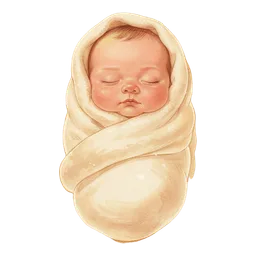
About the size of a newborn baby: 51.5 cm and about 3.6 kg. A picture, not a measurement: every baby grows at their own pace.
Which trimester is week 41?
Week 41 is in the third trimester. In the NHS guide, the third trimester runs from week 28 to the birth.
How often should my baby move?
There is no set number: every baby is different, and you do not need to count kicks. What matters is knowing your baby’s usual pattern from day to day. Movements build up until about 32 weeks, then stay roughly the same until the birth.
What should I do if my baby’s movements slow down or change?
Call your midwife or maternity unit straight away if your baby is moving less than usual, you cannot feel them moving any more, or their usual pattern changes. Do not wait until the next day, even in the middle of the night: maternity units answer 24 hours a day, 7 days a week.
Do babies move less near the end of pregnancy?
No. It is not true that babies move less towards the end of pregnancy. You should keep feeling your baby move right up to labour, and during it too. Fewer movements in the last weeks are a reason to call, not something to wait out.
Checked against NHS (nhs.uk), NHS inform (NHS 24, Scotland), Health Service Executive (HSE), checked on 13 October 2026
Cross-checked3 official sources · What the official pages say
There's no set number of movements you should feel each day - every baby is different.
You do not need to count the number of kicks or movements you feel each day.
The important thing is to get to know your baby's usual pattern of movements from day to day.
Urgent advice: Call your midwife or maternity unit immediately if:
there is a change to your baby's usual pattern of movements
Do not wait until the next day - call immediately, even if it's the middle of the night.
You should feel your baby move right up to and during labour.
There’s no set number of normal movements.
Get to know your baby’s normal pattern of movements.
move more and more up until 32 weeks
Phone your midwife or maternity unit immediately if you notice your baby hasn’t moved as much as usual or their pattern of movement has changed.
Maternity units are staffed 24 hours a day, 7 days a week.
It’s not true that babies move less towards the end of pregnancy.
You should continue to feel your baby move right up to the time you go into labour and while you’re in labour too.
There is no set number of movements that is normal.
Your baby will have their own pattern of movements that you will get to know.
From 32 onwards the movements stay roughly the same until you give birth.
Do not wait until the next day to get advice.
It is not true that babies move less towards the end of pregnancy.
This week’s question
“What has this extra week of waiting been like, honestly.”
Every Sunday, Syncry asks one question like this. Each parent answers in their own words, and the answers become your book.
Every week like this one, together or on your own
In the app the week moves on by itself: what is happening, the Plan of what to do this week, the Bags when it is time, and the Book that keeps the answers to each Sunday’s question.